
Chamberlain Opener Repair
Chamberlain Garage Door Opener Repair in Phoenix, AZ
A Chamberlain opener that quits always picks a bad moment. The motor hums and the door sits there, the remote does nothing, or the lights blink at you and the door refuses to close. We offer Chamberlain garage door opener repair in Phoenix and across the Valley, and most of these calls turn out to be one worn or failed part rather than a dead unit. We diagnose first, tell you plainly what is wrong, and fix what is worth fixing.
Chamberlain is the brand on the shelf at the home improvement store, which means a lot of these openers were installed by a homeowner or a previous owner rather than a dealer. That is fine with us. Whether you put it in yourself or inherited it with the house, we can work on it. Chamberlain shares a parent company with LiftMaster, and the two overlap a good deal, but if the motor head says Chamberlain, this page is written for you. Looking for the dealer-line brand? See our LiftMaster opener repair page.
Service Request
Chamberlain Opener Repair Contact

Chamberlain Opener Service
Practical Fixes for Chamberlain Openers
- Same-Day Service
- Upfront Pricing
- Family-Owned
Common Issues
Common Chamberlain Opener Problems
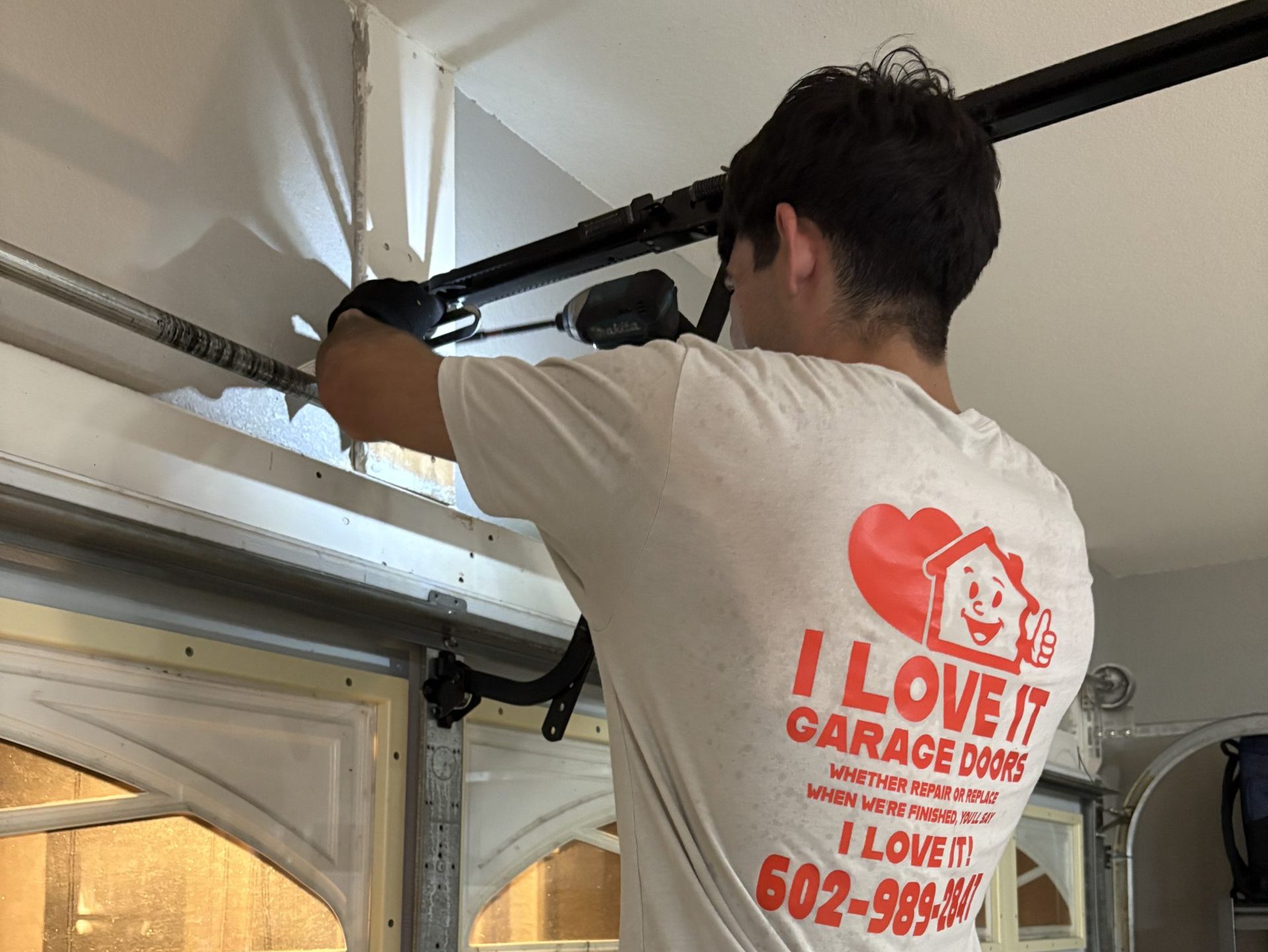
Most Chamberlain trouble comes down to a short list of causes, and knowing which one you have saves a lot of guessing. Here is what we see again and again:
Remote or keypad stopped working.
A dead battery, a lost pairing or a learn button that needs a fresh start
Motor hums but the door stays put.
A worn gear, a weak capacitor or a broken spring
Motor runs but the trolley will not move.
A stripped drive gear or a trolley that never reconnected
Door will not close, or backs up again.
Sensors blocked, out of line or not getting power
Here is a closer look at the failures we see on Chamberlain units, what tends to cause each one, and what we do about it.
The most common hardware failure is the plastic drive gear. Chamberlain openers use a nylon gear inside the motor head, and after years of heat and thousands of cycles the teeth wear down or strip. You hear it as whirring or grinding while the carriage sits still, or the door moves a few inches and stops. Replacing the gear, and usually the gear kit around it, brings the opener back without buying a new one. The trolley, the carriage that rides the rail and pulls the door arm, wears as well, and a bent or dented rail can drag the whole drive out of line.
Another one we see all the time starts with the red emergency release cord. If someone pulled it, maybe to get a car out during an outage, and now the opener runs but the door does not follow, the trolley is probably just disconnected. Many openers require pulling the emergency release cord down and back toward the opener, then running the opener until the trolley reconnects. Since opener designs vary, check the owner’s manual if it does not reconnect easily. If it never catches, a damaged trolley or a stripped gear may be the reason, and that is a good time to call us.
Do not assume the opener is the culprit every time. A broken spring leaves the door too heavy for any motor, and the opener can strain or hum against it. With the door fully closed, pull the red emergency release cord and carefully try lifting the door by hand. If it feels extremely heavy or will not move, do not force it. The spring may be broken. Do not try to lift a garage door with a broken spring unless it is absolutely necessary, and never stand under the door while it is unsupported.
Electrical trouble on a Chamberlain usually points to the logic board, the capacitor on units that have one, or the wiring to the sensors and wall control. The logic board is the brain of the opener. It reads the remote, the wall button and the sensors, and it tells the motor what to do. A voltage spike can damage it, and monsoon season is when we see that most. A failing board shows up as an opener that ignores every control, behaves strangely, or has dead lights on the motor head. If your Chamberlain went dark after a storm, that is the first place we look.
Before we recommend a board, we test the pieces around it. A bad wall control, a pinched sensor wire or a tripped outlet can mimic a board failure, and replacing a board when one of those is the real problem wastes your money. On units with a run capacitor, a weak one is the classic reason for a motor that hums and does not turn. We confirm the failed part, replace only that part, and test the door afterward. A surge protector on the opener outlet is a simple way to protect the board in the Valley.
Our technician checks the opener, the door and the safety system together, then recommends the right path: repair when the fix is straightforward, replacement when the unit has reached the end of its life. You get a free diagnosis and a free estimate before any work begins.
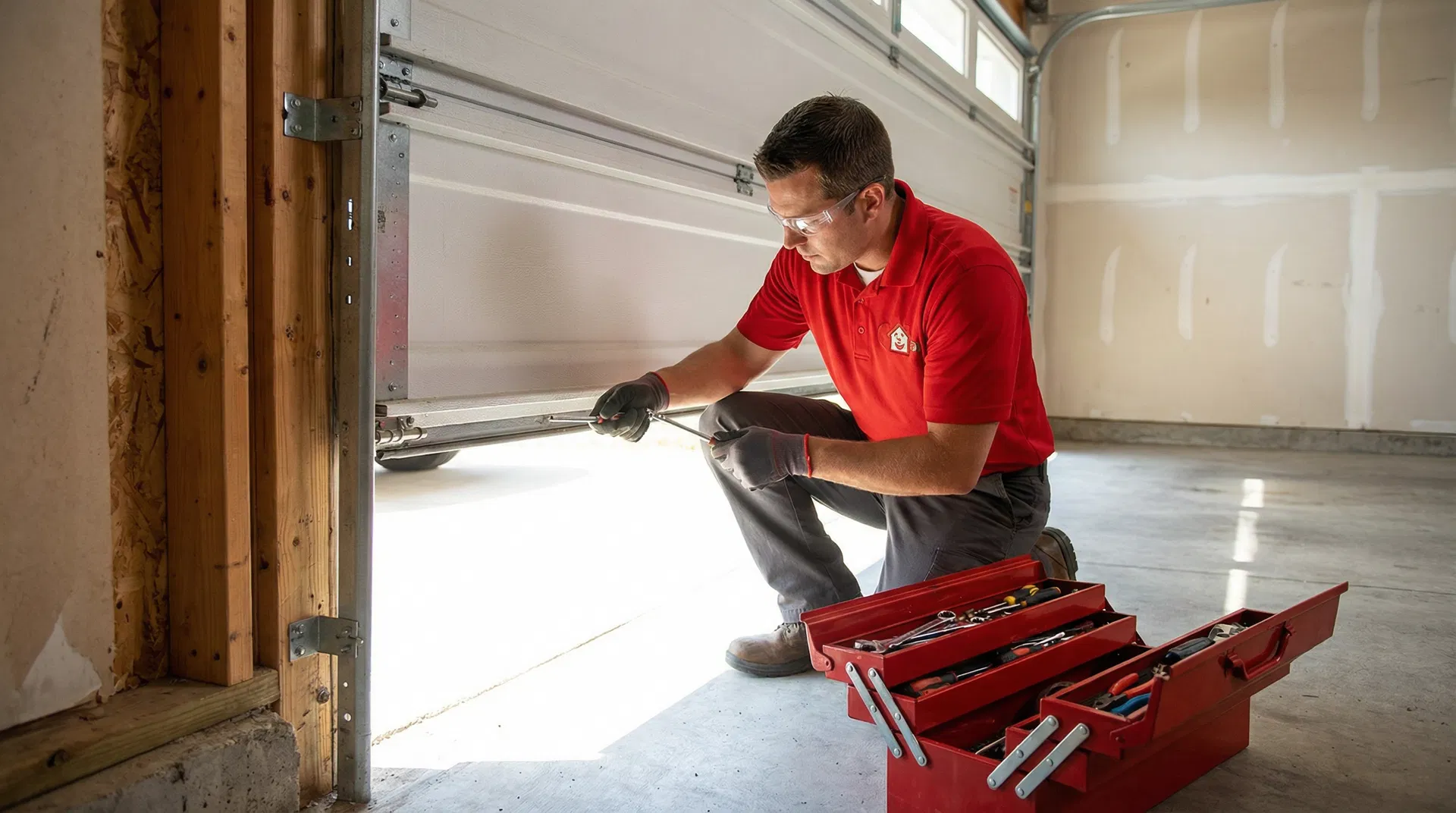
Repair or Replace
Is Your Chamberlain Opener Worth Fixing?
Plenty of Chamberlain openers are worth saving. If the unit is not very old and the failed part is a remote, sensor, gear, capacitor or trolley, repair is usually the better call. These are common, replaceable parts, and a fresh part on a sound motor can give you years more.
Replacement starts to make sense when the motor has burned out, when an older unit is failing in several places at once, when it is fifteen years old or more, or when it has no photo-eye safety sensors, which is a safety problem all by itself. When you do land on Chamberlain garage door opener replacement, we install new openers, including belt drive and chain drive, with battery backup and Wi-Fi control options. Newer garage door openers may offer quieter operation, battery backup options, smart controls, and updated safety features. To compare current units before you decide, this guide to Chamberlain opener models, features and picks is a good place to start.
- Honest advice. If a repair is getting close to the cost of a new unit, we say so, even when it means a smaller job for us.
- Free diagnosis. You learn what actually failed before you decide anything.
- A door you can trust. We test the reverse and the sensors before we leave, so the door closes safely behind your family.
We do not push a new opener when a gear swap or a sensor realignment solves the problem, and we will tell you plainly if a repair is creeping toward the cost of a new unit. You decide with real information, not a sales pitch.
Know The Signs
Signs Your Chamberlain Opener Needs Attention
A Chamberlain rarely fails without warning. If you notice any of these, a call now beats getting stuck later:
Sensor lights. Chamberlain safety sensors show an amber light on one eye and a green light on the other, and both should glow steadily when the beam is lined up and clear. A dark, dim or flickering light means something is in the beam, an eye has been bumped out of line, a lens is dirty or a wire has a fault. Dust storms and spider webs are frequent culprits in the Valley. Remember that sensors affect closing only: they can make the opener refuse to close or reverse shortly after the door starts down, but they never stop it from opening.
- What You Can Safely Check Yourself
Some Chamberlain garage door opener troubleshooting is safe for a homeowner, and it can save you a call. Start with the easy checks: make sure the opener is plugged in, the outlet has power and the breaker has not tripped, replace the remote and keypad batteries, wipe the sensor lenses and clear anything from the beam. If you want to fix a Chamberlain garage door opener yourself, those checks and reprogramming a remote are the jobs worth trying.
Reprogramming works like this. Press and release the learn button on the motor head, then press the button on the remote within about 30 seconds. The learn button is colored, and the color varies by model, so look at yours rather than going by a neighbor’s opener. The color is a clue to which type of remote the unit expects, which is why a remote that works with one Chamberlain will not always pair with another. Press the learn button once and let go. Holding it down until the light goes out erases every remote and keypad the opener knows, and you would be starting from scratch.
Travel limits and force settings are the next place homeowners get into trouble. Travel limits tell the opener where the door stops when fully open and fully closed, and force settings control how hard it pushes before it decides something is in the way. On most modern Chamberlain units you set both with buttons on the motor head, often the up and down arrows together with the learn button, following the sequence in the owner’s manual for your model, since it differs from unit to unit. Older models use adjustment screws instead. If the door stops short of the floor or bounces off it, make one small change at a time and test. Too much force can defeat the safety reverse, so always recheck that the door reverses when it meets an obstruction.
Chamberlain myQ not working is another call we hear. Usually the opener is fine and the problem is the Wi-Fi: the router moved or was replaced, the password changed, the signal is weak out in the garage, or the app needs to be signed back in and reconnected to the opener. Restart the router, confirm another device connects in the garage, and reconnect through the app. If the opener ignores the wall button too, the app is not the problem, and we should look at the opener.
Anything involving the capacitor, logic board, drive gear or motor means opening the motor head, where live voltage can deliver a serious shock and heavy parts can drop. That work, and anything touching the springs and cables on the door itself, belongs with a technician.
- Shock from live voltage in the motor head
- Parts dropping during disassembly
- A door that falls when it loses support
- A wrong-part guess that fails again later
A technician arrives with the right tools and with parts already in the truck, and finds the failed component on the first visit instead of guessing. Ordering parts online on a hunch and swapping them from a ladder is how a small repair turns into a big one.
Why Choose Us
Why Choose I Love It Garage Doors
Many companies work on openers. Here is what you get from us when your Chamberlain misbehaves:
Same-Day Service
Upfront Pricing
Experienced Technicians
Stocked Trucks
Phoenix Climate
How Arizona Heat Affects Chamberlain Openers
Phoenix is hard on garage door openers. A closed garage can climb well past the temperature outside in summer, and that heat works on every component:
Plastic gears and trolleys. Daily heating and cooling makes the nylon gear brittle and wears the trolley, so these parts tend to give out earlier here than in a mild climate.
Logic boards. Constant heat plus monsoon surges shorten the life of the control board, which is why a storm so often ends with a dead opener.
Remotes and keypads. Batteries drain faster in a hot car and a hot garage. Replace them every spring and you avoid many unnecessary calls.
Sensors. Brackets expand and contract through the day, and haboob dust coats the lenses. A sensor that worked yesterday can drift off target overnight.
Wi-Fi control. A garage far from the router often has a weak signal, and a myQ connection that drops at the edge of that range looks like a broken opener when it is not.
A little upkeep goes a long way. Wipe the dust off the motor head and sensors, check that the door reverses, put fresh batteries in the remotes each spring, and plug the opener into a surge protector.

Chamberlain Garage Door Opener Repair in Phoenix
Motors, Gears, Sensors, Remotes and Smart Controls
A Chamberlain opener is a motor, a drive system, a logic board and a pair of safety sensors, with a remote and a wall control in the mix. When one piece fails it can look like the whole machine died, so we trace the fault to the actual part before we quote.
- Drive gear kits
- Logic board testing and replacement
- Safety sensor alignment
- Remote and keypad programming
- Trolley and rail repair
- Smart control and Wi-Fi setup
Chamberlain garage door opener repair is mostly about replacing one worn part, whether that is a gear kit, a trolley, a board or a sensor. A visit tends to end with one new part and a door we have tested several times. We also reprogram remotes and keypads, realign sensors, and set travel limits and force settings. If all you need is a repair, a repair is all we will do.
Our Process
Our Chamberlain Repair Process
This is what happens when you call us:
Describe what the opener is doing, including any lights or sounds, and we will book the soonest appointment we can.
Our technician looks over the opener, the door and the sensors, then explains what failed.
You get a free estimate before any work starts, and nothing is done without your okay.
We replace the failed part with a quality one from the truck whenever we can.
We run the door repeatedly, test the safety reverse and sensors, and tidy the work area.
Service Areas
Service Areas We Cover
We repair Chamberlain openers throughout the Phoenix metro area, including:
Ready To Get Started?
Get Your Chamberlain Opener Working Again
Call I Love It Garage Doors at 602-989-2841, or send us a message, for a free estimate on your Chamberlain opener. Office phones are answered from 6 AM to 8 PM, every day of the week.
Other Garage Door Services We Offer
Whatever is going on with your garage door, I Love It Garage Doors handles it across the Phoenix Valley: repairs, springs, cables, rollers, panels, openers, new doors, tune-ups and 24 hour emergency calls. Every estimate is free and every repair and install is warrantied.
Got Questions?
Frequently Asked Questions
Have a question we have not answered here? Give us a call and we will be glad to help.
Is my Chamberlain opener worth repairing or should I replace it?
What is the difference between Chamberlain and LiftMaster openers?
Why are the lights on my Chamberlain safety sensors blinking?
How do I program a new remote or keypad to my Chamberlain opener?
My Chamberlain hums but the door does not move. What is going on?
Why is my Chamberlain garage door opener not working after a monsoon storm?
Do you offer emergency Chamberlain opener repair in Phoenix?
How do I reconnect the trolley on my Chamberlain after using the emergency release?
What can I try when my Chamberlain myQ app stops connecting?
When does replacing a Chamberlain opener make more sense than repairing it?
Got A Garage Door Problem?
We've Got Solutions!
Call for a free diagnosis, a straight answer on whether your Chamberlain can be saved, and a clear plan to get your door moving again.
Free Consultation
Get A Free Quote